Details
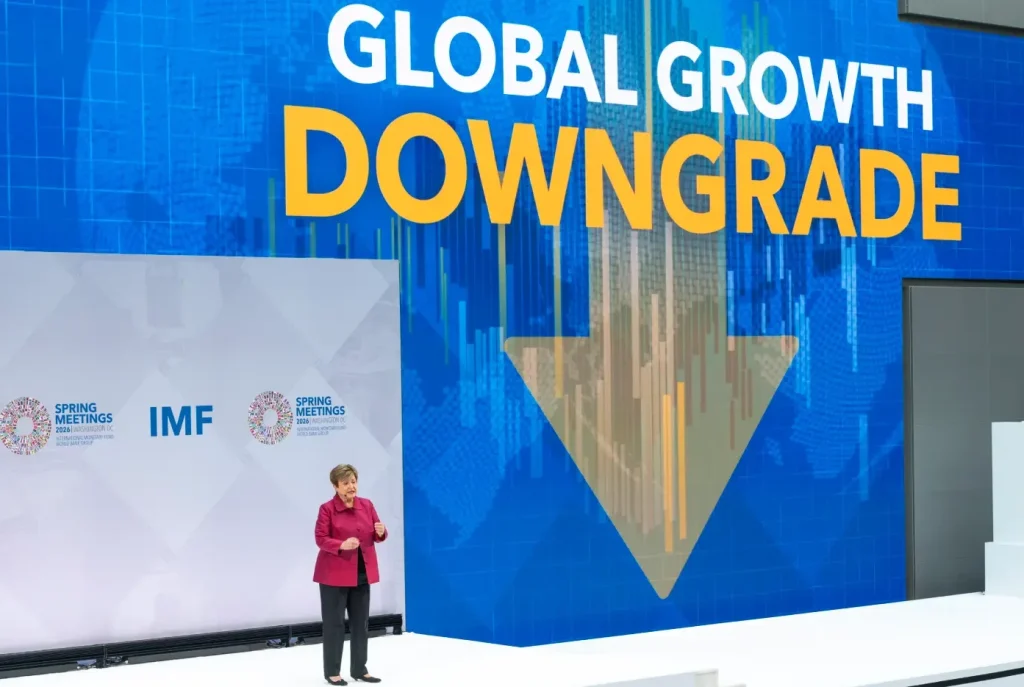
- The IMF said the war in the US-Israel and Iran war has disrupted oil markets, pushed up energy prices and undermined confidence in the markets, stalling what had been a steadier path for global growth.
- In its latest outlook, the fund has cut the earlier projected 2026 global growth forecast from 3.3% down to 3.1%, and raised the inflation forecast to 4.4%.
- In the report it released the IMF mentioned thats its baseline scenario assumes the disruption from the war will begin to fade by mid 2026. Even so, it has warned that the world is already drifting towards a more adverse outcome. Turmoil in energy markets is continuing, with disruption linked to the Strait of Hormuz adding to the strain.
- Under that adverse scenario, global growth would slow to 2.5% and inflation would rise to 5.4% as oil prices remain elevated for longer.
- In its most severe scenario, the IMF projects global growth could fall to about 2%, a level widely associated with a global recession, with inflation possibly climibing above 6% if the war drags on and energy prices stay high into 2027.
- According to the fund the UK faces the sharpest downgrade in the G7, cutting its forecast to 0.8% and warning inflation could approach 4%. The IMF also lowered its US growth forecast to 2.3%.
- The Chief economist for the IMF, Mr Pierre-Olivier Gourinchas said every additional day of disruption in energy markets pushes the global economy closer to the downside scenario.
- The Monetary warned that lower-income and energy-importing countries remain especially exposed, while some exporters particularly Russia, could benefit from higher prices. It also urged governments to avoid broad, costly subsidy measures and to instead focus on temporary, targeted support.
What Else
- The IMF said the clearest way to limit the damage is to end the conflict and restore stability to energy markets. It also urged central banks to stay alert as higher energy costs risk feeding through into broader inflation and forcing another round of tighter monetary policy. Attention will now turn to whether the war will eases down, oil prices retreat and if policymakers can prevent a deeper hit to growth from becoming a broader inflation and recession shock.