News
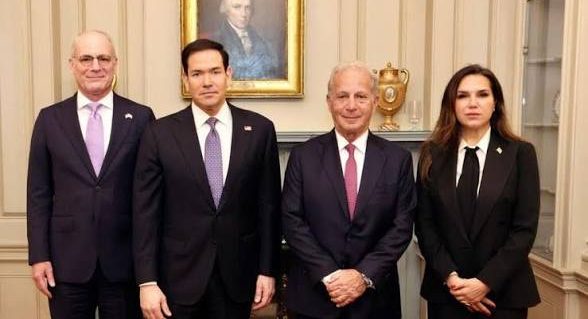
Washington has opened a new direct channel between Israel and Lebanon after Secretary of State Marco Rubio brought together the two countries’ ambassadors for a two-hour meeting that ended with an understanding to hold further rounds of negotiations at a mutually agreed time and place.
The move marks a rare political opening at a highly sensitive military moment, with Israeli operations continuing in southern Lebanon and the Trump administration trying to shift the track from battlefield confrontation toward a broader political understanding.
Details
• Netanyahu had previously rejected Lebanese proposals for direct talks.
• U.S., Israeli and Lebanese officials said the meeting was aimed at further isolating Hezbollah, pressing for its disarmament, and strengthening the Lebanese government and its sovereignty.
• Lebanese Ambassador Nada Hamadeh stressed during the meeting the urgent need for a ceasefire and the full implementation of the November 2024 cessation of hostilities agreement.
• The Lebanese side also called for concrete measures to address the severe humanitarian crisis caused by the fighting.
• Israeli Ambassador Yechiel Leiter said Israel will continue military action against Hezbollah.
• Leiter said Israel is ready to work with the Lebanese government to achieve Hezbollah’s disarmament.
• Washington said it supports Israel’s right to defend itself against Hezbollah’s continued attacks.
• The joint statement stressed that any agreement to cease hostilities must be reached between the two governments and brokered by the United States, not through a separate track.
• That wording sends a direct message against folding the Lebanese front into any Iranian-led arrangement or pressure.
• Iran and Pakistani mediators had claimed that the current ceasefire with Iran also applied to Lebanon, but Washington and Tel Aviv rejected that.
• The meeting was the highest-level engagement between Israel and Lebanon since 1993, following lower-level talks brokered by the Trump administration last year.
What next?
The track under discussion goes beyond a temporary calm. The parties also discussed a longer-term vision for border delineation, a security agreement, and eventually the possibility of a full peace deal. The U.S. message is clear: Washington wants to move the talks beyond the 2024 arrangement toward a broader settlement.
Source