The latest
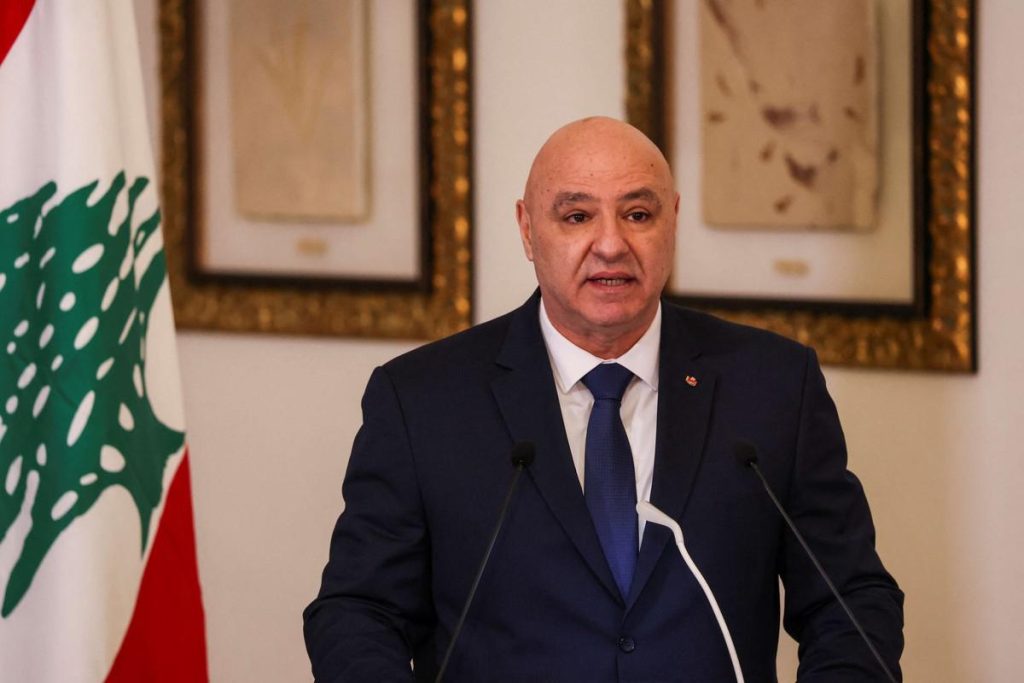
Lebanese President Joseph Aoun escalated his rhetoric against Hezbollah, stating that the party’s Secretary-General, Naim Qassem, does not represent the Lebanese people, a day after Qassem rejected the ceasefire agreement between Lebanon and Israel.
In an interview with CNN, Aoun addressed Qassem, saying, “The Lebanese people are not your people,” in one of the clearest public criticisms leveled by a Lebanese president against the Hezbollah leadership since the outbreak of the latest war.
He explained that he had spoken with Lebanese from various sects, including Shiites, and many told him they were weary of the ongoing war with Israel and its resulting human and economic losses.
Aoun’s remarks come at a time when the Lebanese state is attempting to consolidate its authority on the ground and reduce Hezbollah’s influence, amidst increasing internal and external pressure to address the issue of the party’s weapons.
Details
• Aoun criticized Qassem’s rejection of the ceasefire agreement, after the latter described it as a “surrender” unacceptable to broad segments of the Lebanese population.
• The Lebanese president stated that the current war has not achieved its objectives for any party, considering that both Lebanese and Israelis have paid a heavy price as a result of its continuation.
• He affirmed that Lebanon is “ready, willing, and committed” to entering into negotiations to end the war if the other side demonstrates the same will.
• He urged the Israelis not to rely on military solutions, saying that security and stability cannot be achieved through perpetual war.
• He did not rule out a future meeting with Israeli Prime Minister Benjamin Netanyahu, but linked it to first reaching an agreement to end the war. • During the interview, he displayed photos of Lebanese civilians killed in the war, emphasizing that the victims were not all Hezbollah supporters, but rather Lebanese citizens who paid the price of the conflict.
What are we watching?
Aoun’s statements open a more explicit political confrontation with Hezbollah at a sensitive moment in the war. Attention will be focused on whether these positions will translate into concrete steps regarding the party’s weapons, or whether they will remain within the framework of mutual political pressure while negotiations for a ceasefire continue.