The latest
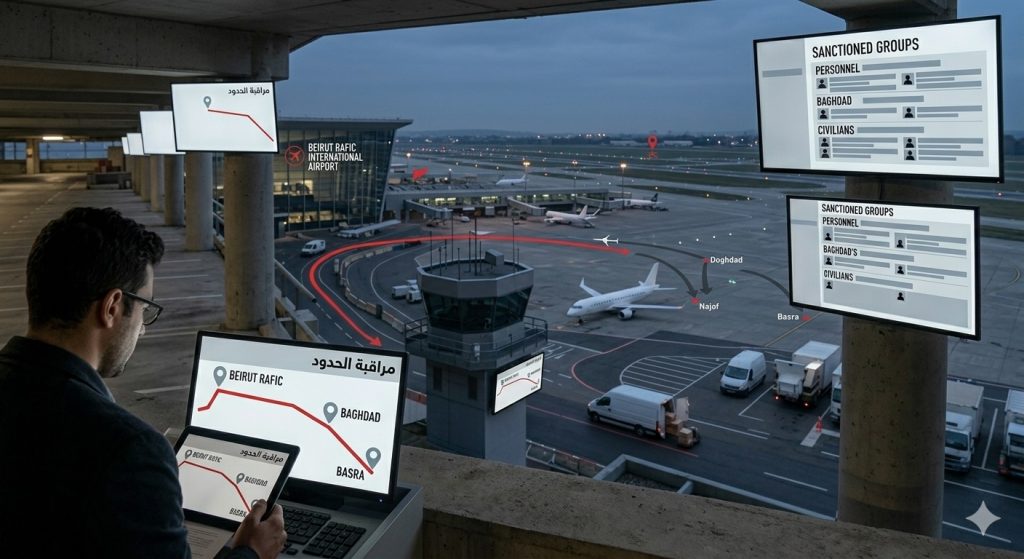
Washington is monitoring the movement of Iraqi factions listed under U.S. terrorism and sanctions measures, as travel between Iraq and Lebanon increases and concerns grow over the possible use of flights to move personnel or money under humanitarian cover.
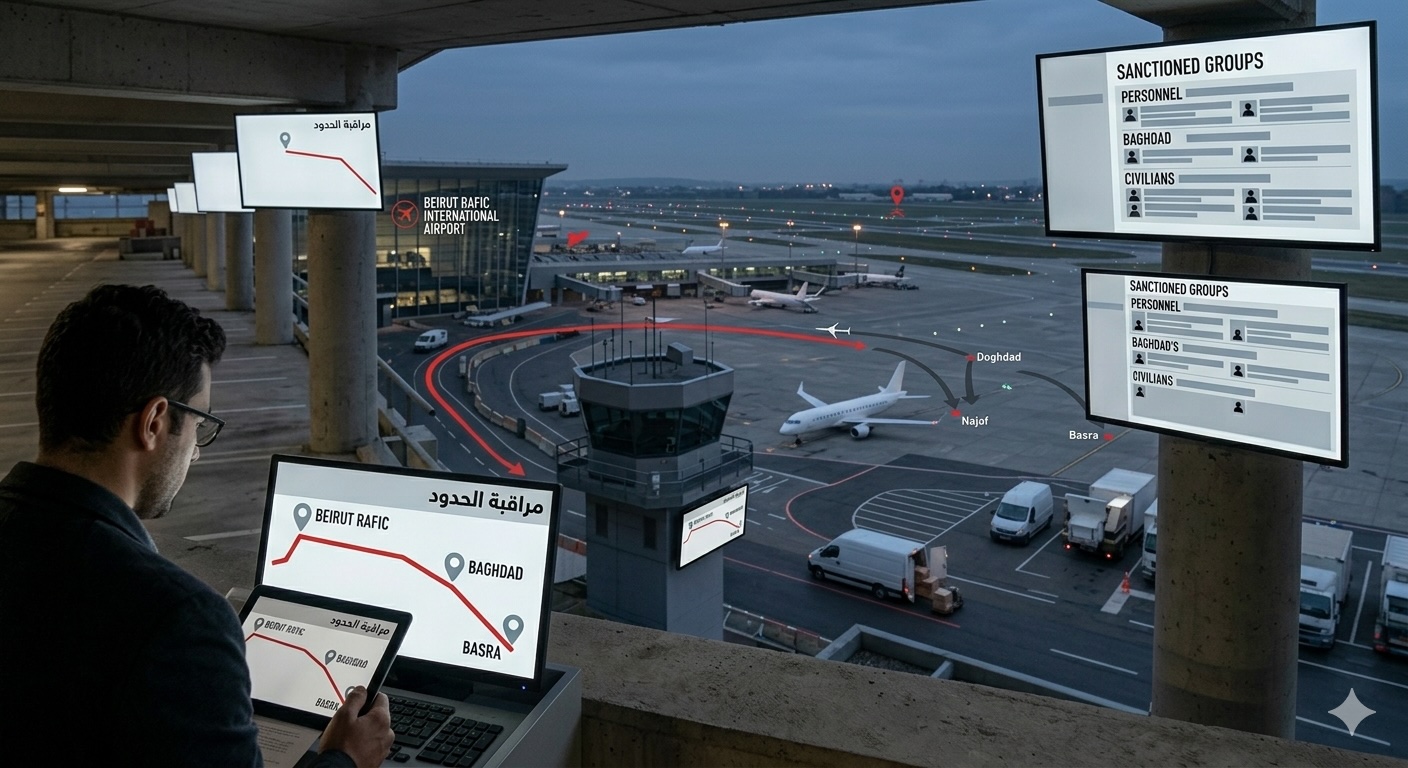
A security source at Beirut’s Rafic Hariri International Airport told +ontime that the airport has recently seen a noticeable rise in arrivals linked to Iraqi factions. Some, the source said, carry service passports. Others present themselves as bringing aid for displaced people.
The source said some arrivals invoke the name of “Muqtada al-Sadr” or humanitarian work linked to Hezbollah’s social environment to reduce suspicion. The source added that some of the arrivals are Iranians carrying Iraqi passports and large amounts of cash, which they say is meant for displaced families.
Details
• Factions under U.S. designation: Washington has listed Asaib Ahl al-Haq as a foreign terrorist organization since 2020. It has also designated Harakat al-Nujaba among Iran-aligned Iraqi groups it says were involved in attacks on the U.S. Embassy in Baghdad and bases hosting U.S. and coalition forces.
• Flights under scrutiny: The airport security source said direct flights between Iraq and Beirut by Middle East Airlines, Iraqi Airways and UR Airlines rose from around 14 flights a week to higher levels, reaching about 28 weekly flights in some periods. Most flights came from Baghdad, Najaf and Basra.
• Possible humanitarian cover: According to the source, Lebanese and U.S.-linked security channels are watching the possible use of aid for displaced people as cover for the movement of personnel or money tied to Iraqi factions.
• Rene Mouawad Airport: The source said Washington is pressing for the reopening of Rene Mouawad Airport in northern Lebanon. Officially, the move is presented as a way to ease pressure on Beirut airport and expand civil aviation capacity. But it now carries an added security dimension because of concerns over concentrating all air arrivals in one airport.
• Iraqi airports after the collapse of the land route: In Baghdad, an informed source said the U.S. side expressed concern over the appointment of a figure close to the IRGC as transport minister. The concern, the source said, is that Iraqi airports could become an air link between the IRGC and Hezbollah after the fall of Bashar al-Assad’s regime and the disruption of the land route through Syria.
• Promises from the prime minister’s office: According to the same source, Prime Minister Ali al-Zaidi told the U.S. side that his office would directly oversee civil aviation and limit IRGC influence over Iraqi airports. Washington also asked for a known and credible figure to be appointed to manage Iraq’s civil aviation authority.
• Iraq’s Transport Ministry: Iraq’s parliament voted to appoint Wahb Salman Mohammed al-Hassani as transport minister. Hassani is a former military officer and a member of the Badr Organization, one of Iraq’s Iran-aligned forces. The source said IRGC Quds Force commander Esmail Qaani had insisted on Hassani taking the post during a visit before the government was formed.
Why it matters
This is not just about normal travel between two countries. The core U.S. concern is that the Iraq-Lebanon air route could become an alternative to the land corridor that once linked Iran to Hezbollah through Syria.
If the sources’ assessments are accurate, Iraqi factions may be trying to use humanitarian cover, service passports and multiple airlines to keep a political and financial support line open into Lebanon.
What to watch
The key indicator is the volume and profile of flights arriving in Beirut from Baghdad, Najaf and Basra, along with the money or cargo moving under the label of humanitarian aid.