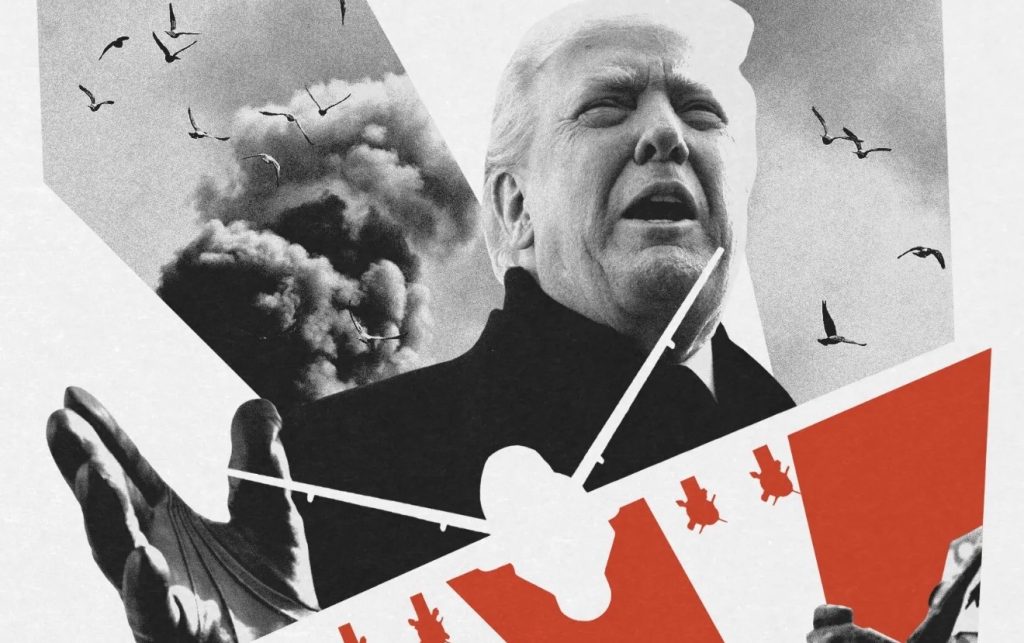
What is striking about Trump’s war on Iran is the way he has chosen to present it. For decades, the United States was not so much a country that avoided wars as one that became highly skilled at hiding them: distant wars, financed through debt, fought by a small professional military, and managed under dense layers of secrecy, classification, and technical language. Very little was asked of the American citizen: no war tax, no mass conscription, and no daily direct contact with the real cost of military decision-making.
Trump has broken that pattern, at least in part. He did not come to end the model of open-ended war. He came to put it back on stage. In his April 1 speech, he offered neither a new strategy nor a clear definition of what Washington actually wants to achieve. But he did offer something else: a president speaking about war as a self-contained narrative, comparing days and weeks to the great wars of the twentieth century, as if the issue were merely a matter of time and patience, rather than a dangerous practice that should raise serious questions about purpose, exit, and the limits of escalation.
The New York Times report argues that, for Trump, war is not a heavy burden that requires a coherent political justification. In his vocabulary, it is an exciting, marketable spectacle. That is why the last few months have appeared fragmented and scattered: Iran, Venezuela, Cuba, Greenland. These did not emerge as a chain of conflicts driven by one clear political line so much as a sequence of media episodes inside one continuous stream. One war fades from the screen, only to be replaced by a bigger explosion, a new adversary, or a fresher threat.
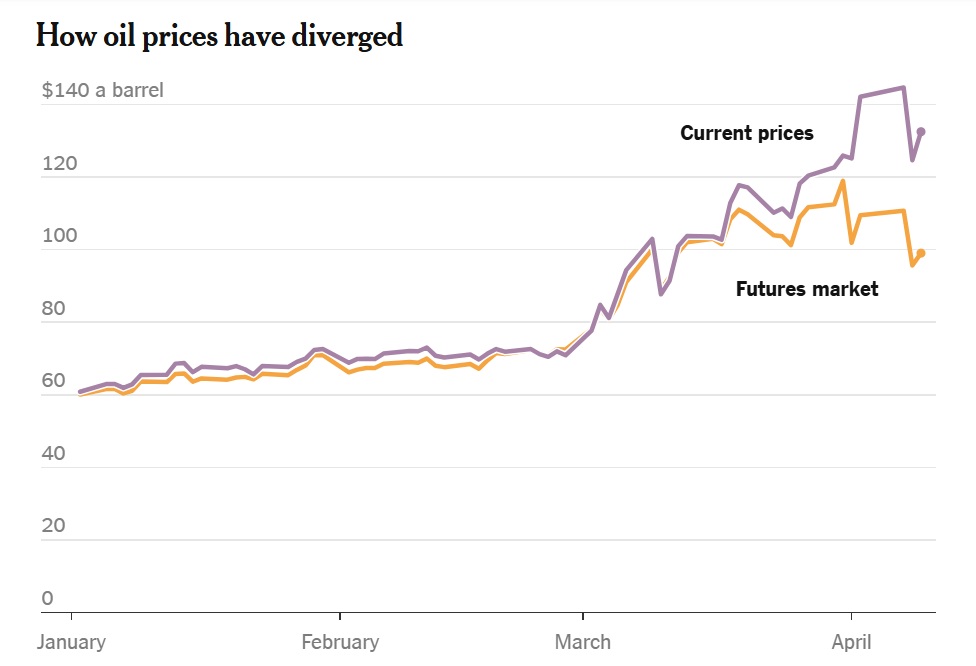
The report links the logic of war to the logic of content. The problem is not simply the administration’s aggressive language. The deeper problem is that it is pushing war into the space of memes, short clips, and digital symbolism. When the White House did that, it seemed to be betting that the American public no longer wanted to understand war, only to consume it visually and emotionally. But that wager, the report suggests, began to shake when the consequences moved from the screen to the market: maps of the Strait of Hormuz replacing sarcastic clips, higher fuel prices replacing digital excitement, and tension inside Trump’s own camp replacing the early enthusiasm.
In that context, the report reads Joe Kent’s resignation as an early sign that the contradiction is starting to show. Trump, who built part of his political image on rejecting endless wars, has found himself being pushed into a conflict that looks open-ended in time and costly in politics. This is where the central paradox appears. Trump is not a total break from American history. He is also a logical result of it. On one hand, he looks more explicit and theatrical than his predecessors. On the other, he is operating through the very same structure that made America’s twenty-first century wars lighter on the domestic public and less present in the country’s moral and political consciousness.
This is the heart of the argument. America’s long wars did not continue only because presidents wanted them to. They continued because the entire system redesigned the relationship between society and war. War was no longer paid for directly by the citizen; it was financed through borrowing and printing. The whole society no longer shared in the human losses; only a narrow, professional segment of the population bore the cost. And even when the War Powers framework tried to pull Congress back into the picture, presidents kept finding ways around open debate before bombing or invading.
Technology deepened this pattern even further. With drones, then targeting systems, software platforms, and AI-driven analysis, war became cheaper for the side executing it and less psychologically immediate for the public in whose name it was being fought. And when the direct costs fall, the public urgency to think seriously about war also declines. People simply do not feel that it touches them enough to oppose it with sustained seriousness.
From there, the report moves into a broader critique of the idea of clean, technological war. Military progress is designed, above all, to reduce the costs for the side that possesses the technology. And that creates a new kind of citizen in wartime: not a political actor who shares the burden, but a passive receiver who engages with war as just another piece of content. Participation here becomes little more than digital engagement.
At precisely this point, the writer argues that Trump’s digital aggressiveness is not a return to a republic of warriors, as some theorists of American power imagine. It is, in fact, a burlesque version of it. The state asks almost nothing of its people beyond clicking, watching, and reacting. The larger questions of war and peace, meanwhile, have lost much of their intellectual and moral force over time.
America once hid its wars beneath bureaucratic language and institutional opacity. Under Trump, it has begun to present them as a direct and entertaining spectacle. But the underlying reality has not changed very much:
• a distant war,
• a society detached from it,
• and a flexible national story that can tell itself almost anything, so long as the bond between military decision and civilian cost has been severed.
What’s next?
If this path continues, the question will not only be where the Iran war is headed, but how war itself will be understood inside America. Will it remain an exceptional decision with a beginning, an objective, and an end? Or will it become a permanent spectacle: expandable, repackaged, and resold politically whenever the White House needs a new enemy or a bigger scene?
Source: