Information obtained by +ontime indicates that strikes hit a building in Tehran and another in Qom described as a key site, as part of a broader wave that also targeted highly symbolic state structures, including parliamentary-linked buildings and other government facilities.
According to the same information, a site being discussed in some circles as a venue for a sensitive gathering is the General Secretariat building. The facility is described as housing administrative functions, a publication known as Hokumat-e Eslami, and a small research unit. On this account, the building is not sized to host an 88-member session, let alone the security and aides that would accompany such a meeting. No verified reporting has emerged so far identifying specific individuals who were inside at the time of the strike.
The information also indicates that larger meetings, when held, were conducted in the basement of the Dar al-Shifa school adjacent to the Fayziyeh complex — making the scenario of a full, general meeting inside the administrative building less likely than a smaller, restricted gathering involving the presidency or a subset of members.
In parallel, +ontime’s information suggests that the targeting pattern expanded to police and internal security nodes in areas where public mobilization would be expected, alongside strikes on certain border police posts in Kurdish-linked areas — described as a move that could ease cross-border movement from Iraq into Iran.
The same information indicates that, for the first time, a civilian airport was struck, alongside empty civilian aircraft parked at the airport.
(Analysis) What the strikes appear designed to achieve
Based on the information obtained by +ontime, the central hypothesis is that the strike set was not only about destroying infrastructure. It also carried a tactical message: prevent the regime’s remaining senior figures from gathering in one place.
In practice, convening dozens of elderly senior figures from multiple Iranian cities in secrecy is difficult to sustain without exposure. A strike that demonstrates reach against symbolic and administrative nodes can function as a deterrent against any mass, in-person convening. If such gatherings are blocked, the succession process for a new supreme leader could remain effectively frozen unless an online mechanism is approved.
The same reading suggests that as long as decision-making remains concentrated in the IRGC, surrender — if it becomes a subject at all — is likely to be prolonged. The logic is existential: in this view, even after any settlement, survival is not guaranteed for the security apparatus. The information also points to an assessment that Washington and Tel Aviv are pursuing a longer “disarmament” project — likened to a Syria-style model — and that strikes may not stop simply because an opponent signals compliance.
Another unresolved question raised by this account is why certain visible regime faces remain untouched — figures such as Ali Larijani and Abbas Araghchi — despite being more accessible than those already killed. One hypothesis in the information stream is that leaving some recognizable political faces in place serves a functional purpose: they appear on media, issue retaliatory threats, and provide a continuing pretext for the campaign to proceed. Under this logic, once military objectives are achieved, those figures could still be removed.
The information also points to internal friction among surviving elites, including tensions between Larijani and Mohammad Bagher Ghalibaf, complicating any attempt to create a coherent decision center. In parallel, the same assessment argues that Israel’s near-term preference is for the emergence of a political leadership in Iran — even if largely symbolic — to manage a transition phase while military objectives are completed.
On the ground, the information says strikes are degrading IRGC, internal security, and police facilities across Iran to widen the space for an uprising, with indications that IRGC elements have begun positioning inside schools.
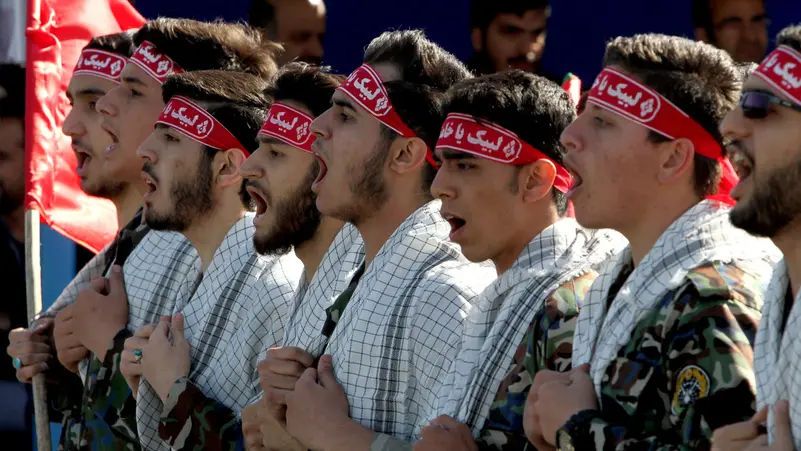
The most structurally difficult challenge, however, is described as the Basij network: a local branch embedded in virtually every mosque and in large husseiniyas, often with a small-arms room. The information claims that some mosque burnings during a recent protest wave were tied to attempts to neutralize Basij nodes inside religious sites, because fire was allegedly directed at demonstrators from within the mosque or from rooftops. The assessment argues that these micro-nodes are extremely difficult to strike militarily because they are dispersed inside civilian and religious fabric. A past estimate cited in the information puts the number of such nodes around 3,000 — implying a persistent internal security challenge even if central state structures weaken.
What’s next
•Watch for any verified identification of who was inside the struck buildings, as that would clarify whether the intent was to stop a gathering or to target specific individuals.
•Track whether the succession mechanism stalls further, and whether an online meeting format becomes an officially accepted workaround.
•Monitor whether the police-station targeting is episodic or becomes a sustained campaign to weaken daily control and widen protest space.
•Track Basij posture in cities, as local deployment patterns could shape whether unrest expands or is contained.
Source: Information obtained by +ontime from a person familiar with internal discussions and an operational reading of the targeting pattern and its implications.