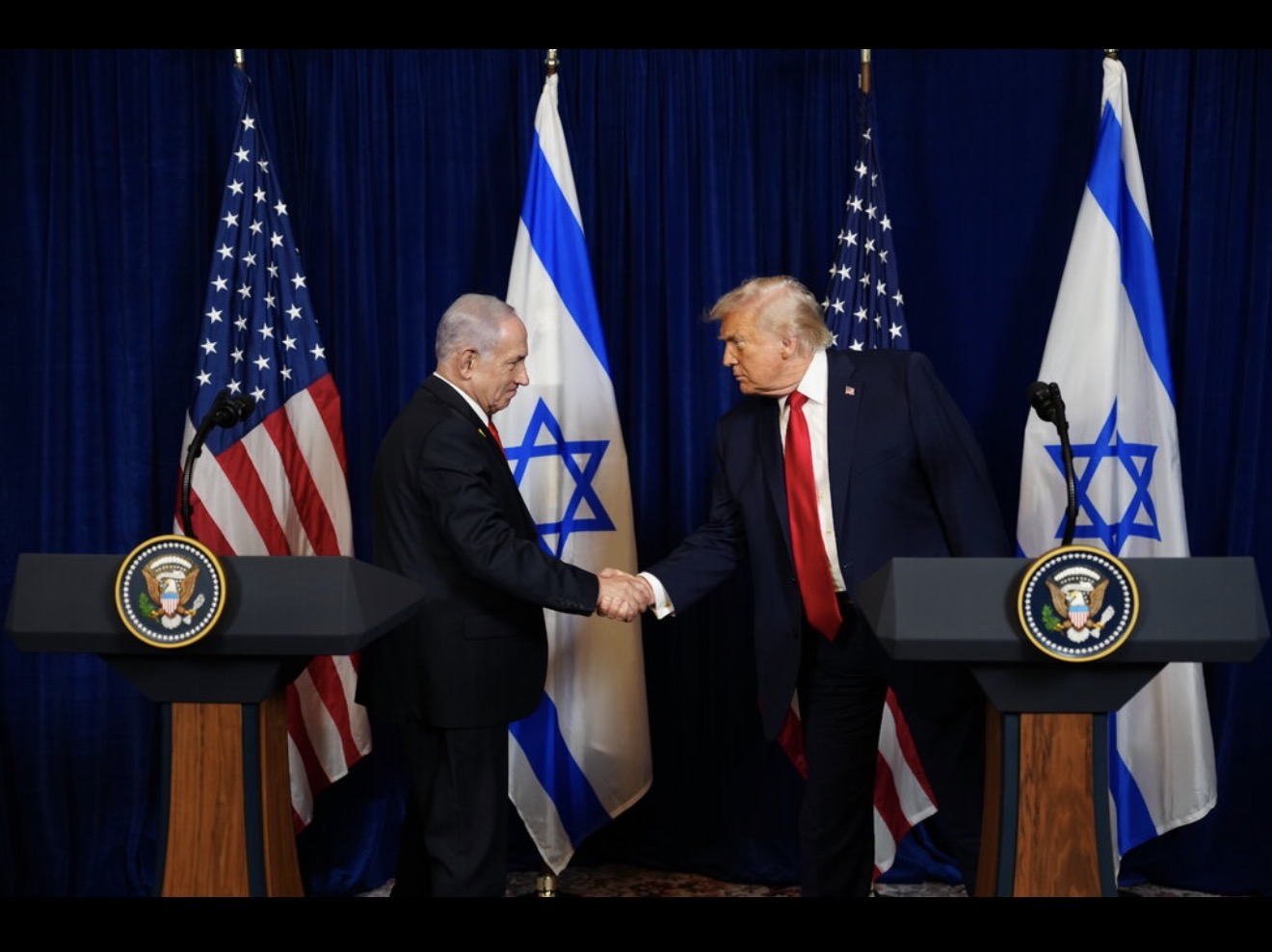
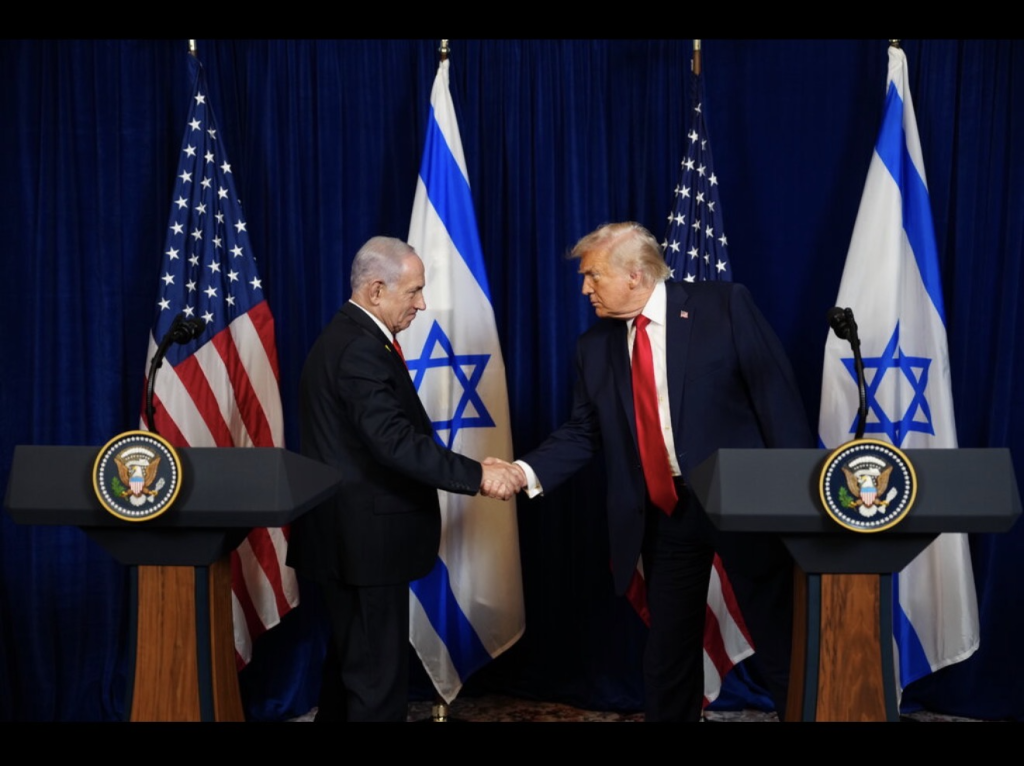
Israeli Prime Minister Benjamin Netanyahu walked into the Oval Office on the morning of Feb. 11 with a clear objective, The New York Times reported: keep President Donald Trump on a trajectory toward war with Iran.
For weeks, according to the Times’ reconstruction, the United States and Israel had been privately coordinating on a potential military offensive. But Trump administration officials had also recently opened negotiations with Iran over the future of its nuclear program — and Netanyahu wanted to make sure that the diplomatic track did not undercut the attack plans.
Over nearly three hours, the two leaders discussed the prospects of war, possible dates for an attack and the remote possibility that Trump might still be able to secure a deal, the report said. Days later, Trump publicly signaled deep skepticism about diplomacy, dismissing past negotiations with Iran as endless “talking and talking and talking,” and floated regime change as the “best thing” that could happen.
Two weeks after that Oval Office meeting, the United States entered the war. Trump authorized what the Times described as a vast bombardment in conjunction with Israel that swiftly killed Iran’s supreme leader, struck civilian buildings and military and nuclear sites, pushed the country toward chaos and set off violence across the region. The report said six U.S. troops had been killed so far, alongside scores of Iranian civilians, and that Trump indicated more American casualties were likely as the campaign dug in for an assault that could last weeks.
Publicly, Trump appeared to take a circuitous route to war — alternating between the language of deal-making and the language of toppling the regime — and, the Times wrote, he did little to build a sustained public case that a war was necessary immediately. The limited argument he and his aides made, the paper added, included claims about the imminence of the threat that were not accurate.
Behind the scenes, however, the move toward war “grew inexorably,” the Times reported, driven by Netanyahu’s persistent pressure to strike what he argued was a weakened Iranian regime, and by Trump’s confidence after a recent U.S. operation that toppled Venezuela’s Nicolás Maduro in January.
The Times said its account was based on interviews with people with direct knowledge of the deliberations and with officials across the debate — including regional diplomats, Israeli and U.S. administration officials, presidential advisers, congressional lawmakers, and defense and intelligence officials — most of whom spoke anonymously because of the sensitivity of operational details.
Netanyahu’s campaign to bring Washington fully into the fight had been building for months, the report said. In December, during a meeting at Trump’s Mar-a-Lago estate, Netanyahu had asked for approval for Israel to hit Iranian missile sites in the coming months. Two months later, he got more than that: a full partner in a war aimed at toppling Iranian leadership. The White House press secretary, Karoline Leavitt, described Trump’s decision as “courageous,” according to the Times.
Inside Trump’s inner circle, the report said, there were few voices arguing against military action. Even Vice President JD Vance, a longtime skeptic of U.S. interventions in the Middle East, argued in a Situation Room meeting that if the United States was going to hit Iran, it should “go big and go fast.” In that same meeting, Joint Chiefs Chairman Gen. Dan Caine warned that a war could produce significant American casualties. Days later, however, Trump publicly portrayed his military adviser as far more reassuring, writing on Truth Social that Caine viewed military action as “something easily won,” according to the report.
The Times also described what it portrayed as limited transparency with Congress. During a Feb. 24 meeting with the so-called Gang of Eight, Secretary of State Marco Rubio did not mention that the administration was considering regime change, people familiar with his comments told the paper. The White House, the report said, resisted pressure to seek congressional consent and made few efforts to make the case for war on Capitol Hill.
Even so, the administration proceeded with one last round of diplomacy. Witkoff and Jared Kushner traveled to Geneva for indirect talks with Iranian Foreign Minister Abbas Araghchi. The Iranians presented a seven-page plan outlining proposed enrichment levels that alarmed U.S. negotiators, the report said. The Americans insisted on “zero enrichment” and even offered nuclear fuel for a civil program, but Tehran refused. Witkoff and Kushner then concluded that a deal was not achievable and relayed that assessment to Trump.
The Times suggested that, whatever its public framing, diplomacy served another purpose: buying time for the largest U.S. military buildup in the Middle East in a generation. In mid-January, the Pentagon was not positioned for a long war — no aircraft carriers were in the region, fighter squadrons were elsewhere, and bases hosting roughly 40,000 U.S. troops were short on air defenses for an expected Iranian retaliation. Israel, too, needed time to bolster interceptors and deploy air-defense batteries.
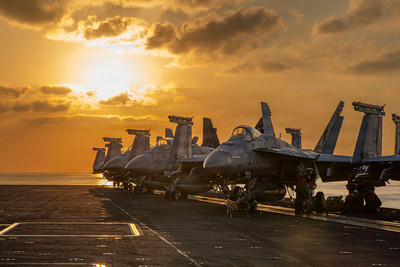
Netanyahu asked Trump on Jan. 14 to delay any strike until later in the month to allow Israeli preparations to be completed, the report said, and Trump agreed. As planning continued, U.S. forces surged into the region: two aircraft carriers and supporting ships, fighter jets, bombers, refueling tankers and additional air-defense batteries. By mid-February, the Pentagon had assembled a posture capable of sustaining a campaign lasting several weeks.
The report said the decisive shift came with what it called an intelligence coup. The C.I.A., which had been tracking Supreme Leader Ali Khamenei’s movements, learned he would be at his residential compound in central Tehran on Saturday morning — and that senior civilian and military leaders would convene at the same location and time. The C.I.A. shared the intelligence with Israel, and leaders in both countries agreed to begin the war with a bold, daylight leadership strike.
Trump issued the final order while flying to Corpus Christi, Texas, on Friday afternoon, the Times reported. The White House had initially shifted the start time to offer Tehran one last chance to accept “zero enrichment,” then moved the timeline again to strike Tehran under cover of darkness — before the intelligence on the leadership gathering led to a daylight plan.
The Times reported that Iranian officials believed a daylight strike was unlikely and did not treat the meeting of the Supreme National Security Council as urgent enough to move underground. It also cited Iranian officials saying Khamenei preferred to remain in place rather than be seen as a leader who went into hiding. As senior officials gathered, the missiles struck soon after the meeting began, the report said.