News
The U.S. blockade is pressuring Iran from within, after turning from a military card in the Gulf into an economic crisis affecting oil, the currency, jobs, and prices.
Meanwhile, Mojtaba Khamenei’s message to the Islamic Consultative Assembly reveals that Iran’s leadership is treating the economy as the most dangerous front of the war at this stage.
According to a Wall Street Journal report, the U.S. naval blockade has choked off a large share of Iran’s oil revenues and increased the risk that Tehran may be forced to shut down some wells as its capacity to store crude declines, alongside damage to critical sectors, the loss of more than one million Iranian jobs, and the currency’s fall to record lows.
Details:
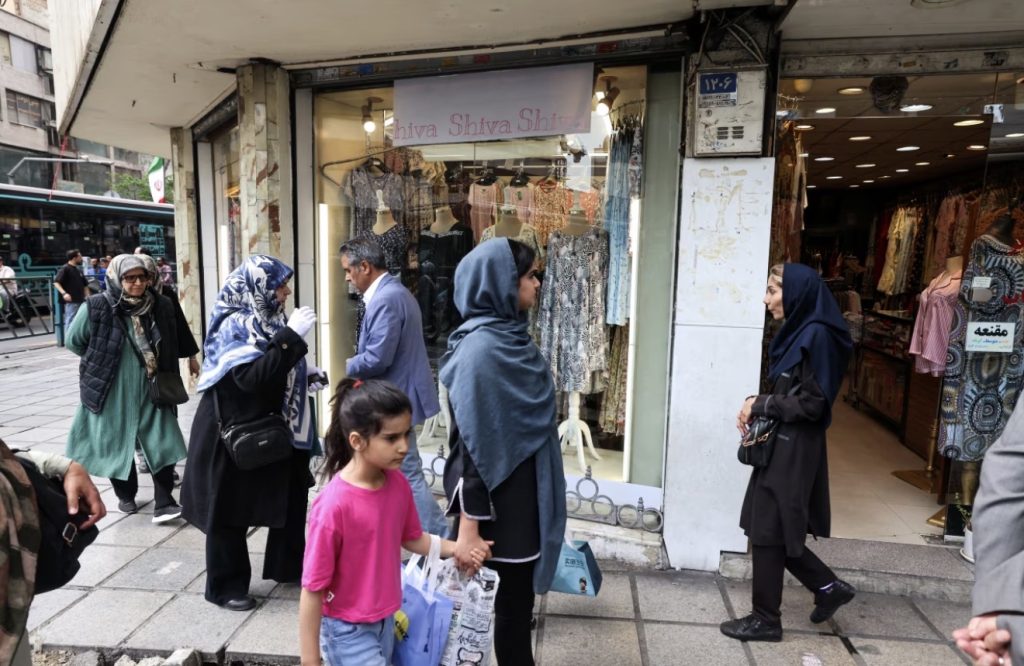
• The report said prices of basic goods such as rice, meat, bread, and cheese have risen sharply in recent weeks, adding pressure on Iranian households.
• Masoud Pezeshkian told the Tehran Chamber of Commerce that “the main war is in the economic field,” warning that if the economy fails, the country fails.
• Iran’s accessible foreign-currency reserves may not be enough to cover more than three months of prewar imports if oil revenues remain cut off.
• The Iranian government has begun urging people to conserve fuel, electricity, and water, in a sign that the blockade’s impact is no longer limited to ports and factories.
• In his message to the Islamic Consultative Assembly, the leader called for focusing on economic stability, reducing inflation, managing liquidity, boosting production, revising the development plan, and adding provisions related to reconstruction and compensation for war losses.
• The message also focused on spreading hope, preserving national unity, and avoiding political and social disputes, language that reflects clear concern that the livelihood crisis could turn into a wider internal rift.
• Iran’s discourse is trying to link economic pressure and the media and political blockade to an external plot to sow division, in an early attempt to frame any potential public anger as an extension of the war rather than a direct result of the livelihood crisis.
• These signals come after major protests before the war, linked to the currency collapse and bazaar anger over the deteriorating economy, making the regime more sensitive to any new wave from the street.
• Despite internal pressure, Tehran still holds external cards, as it can threaten energy and trade flows in the Gulf if escalation resumes, giving it the ability to export part of the pain to Washington and global markets.
What’s Next?
Iran is entering an internal test no less dangerous than the military confrontation. The longer the blockade lasts, the greater the impact of “steadfastness” on the currency, prices, and jobs, and the weaker the effect of the “national mobilization” the regime uses to justify the war.
So the real question may not be:
How much can the Iranian street endure economically before bazaar and currency protests return to the heart of the political equation?