The latest
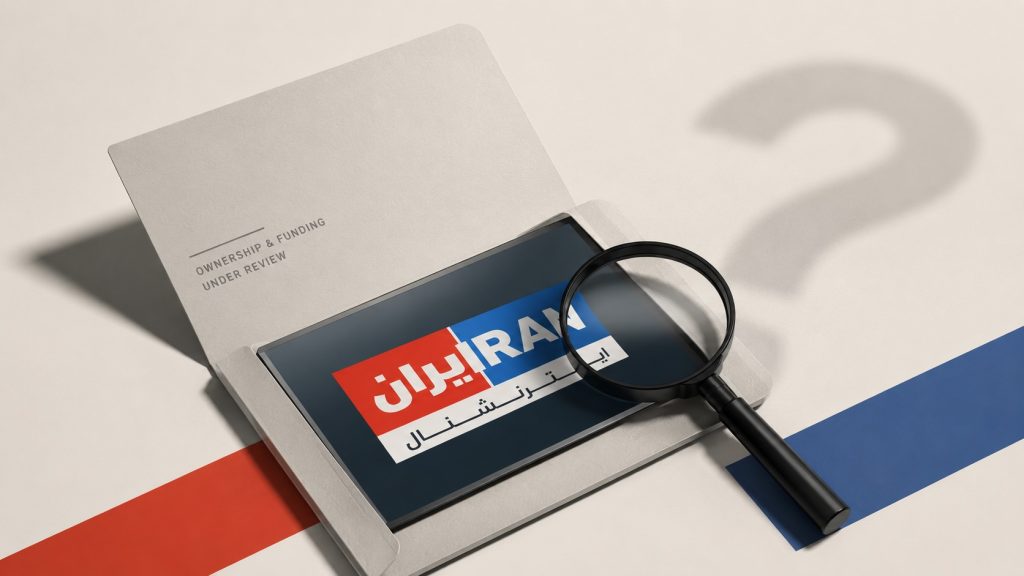
The Financial Times has reopened scrutiny of the ownership and funding structure behind Iran International, the Persian-language network that has become one of the most influential outlets covering Iran from abroad.
The report, based on British corporate filings and offshore records, detailed a major financial restructuring at Volant Media UK, the company that owns the network.
Details
• According to the Financial Times, Volant Media UK lost more than £410 million over the past five years.
• Company accounts showed that nearly £482 million in debt was owed to related entities by the end of 2024.
• On Dec. 13, 2025, the company issued about 648 million new shares, valued at roughly £648 million, as part of a debt-to-equity conversion.
• British company records also showed that Volant Media UK’s original 50,000 shares were transferred to Info-Cast Cayman Limited, a company registered in the Cayman Islands.
• The Financial Times said the sole director of Info-Cast Cayman Limited is Saleh Hussein Al-Dowais. It noted that a person with the same name is chief operating officer at the Saudi Research and Media Group.
• The paper did not present direct evidence of Saudi government funding for Iran International. Its report focused instead on the ownership links and financial structure surrounding the network’s parent company.
• Iran International said the debt-to-equity conversion was a normal financial step intended to strengthen the company’s balance sheet.
• The network said the transaction did not involve any new cash injection.
• Iran International also denied receiving funding from Saudi Arabia or any other government, arguing that claims about its financing repeat a narrative promoted by the Iranian regime.
• Kasra Aarabi, director of IRGC research at United Against Nuclear Iran, strongly criticized the Financial Times report. He described Iran International as an information lifeline for people inside Iran and said Tehran has repeatedly tried to silence the network and target its journalists.
• Aarabi said the channel has become one of the most important independent news sources for Iranians, which he argued explains the pressure it faces from Tehran.
• Miad Maleki, an Iranian American activist, New York Post editor and former U.S. State Department official, also defended the network.
• Maleki said his own appearances on Iran International prompted classmates and relatives across Iranian cities to contact him after seeing him on air, a sign, he said, of the channel’s reach inside Iran despite official restrictions.
• He also said the network has broken major stories in recent years by publishing information and documents from inside Iranian state institutions before other outlets.
• Critics of the network argue that its influence does not remove the need for deeper scrutiny of its ownership and funding, especially for a media outlet with a major role in one of the Middle East’s most sensitive political files.
What to watch
The Financial Times report is unlikely to end the debate over Iran International. It may instead widen questions over the network’s ultimate ownership and the historical funding that allowed it to absorb hundreds of millions of pounds in losses.
Iran International, meanwhile, is likely to keep defending itself through its journalism and its reach inside Iran. The core dispute will remain the same: whether the network should be seen primarily as an independent Persian-language outlet, or as a powerful media institution whose financial structure requires more transparency.
Sources: