A new CTC Sentinel report examines the case of Mohammad Baqer al-Saadi, an Iraqi national arrested in Turkey and extradited to the United States in May 2026.
U.S. prosecutors accuse al-Saadi of working with Kata’ib Hezbollah and Iran’s Islamic Revolutionary Guard Corps. They allege he helped plan, coordinate and publicize at least 18 attacks in Europe and two in Canada.
The attacks were claimed under the name Harakat Ashab al-Yamin al-Islamiya, or the Islamic Movement of the Companions of the Right Hand. The FBI describes the group as a Kata’ib Hezbollah front.
Details:
• The report portrays al-Saadi as more than a field operative, describing him as a trusted figure inside networks tied to Kata’ib Hezbollah and the Quds Force.
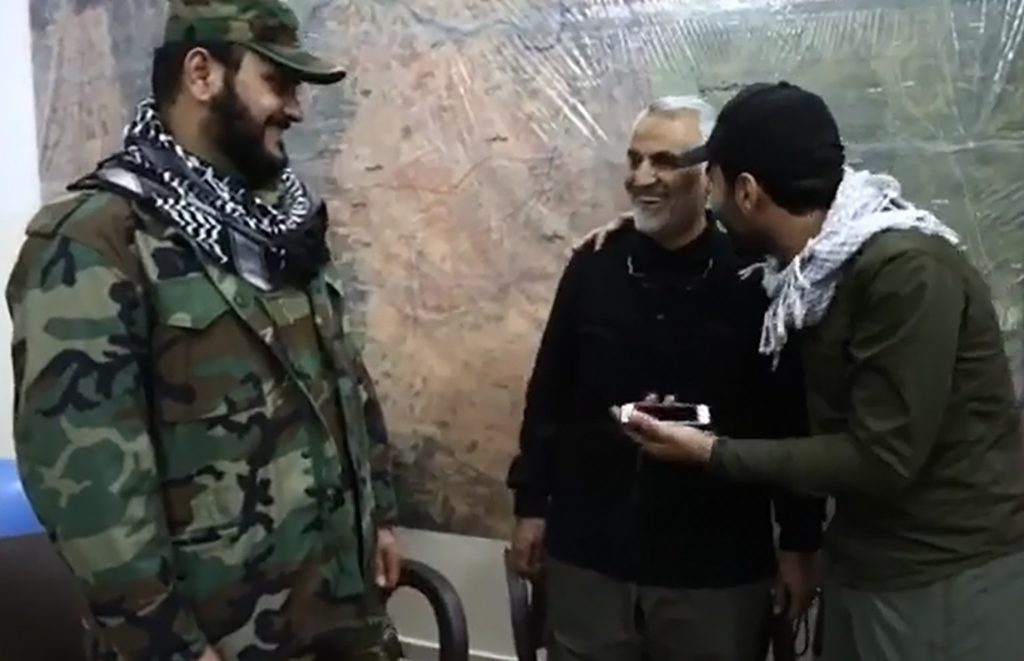
• Open-source images cited by the authors show al-Saadi alongside Qassem Soleimani, Abu Mahdi al-Muhandis, Hadi al-Amiri and later Esmail Qaani.
• Prosecutors allege al-Saadi had advance access to HAYI statements and attack material before they appeared publicly.
• The report says he is accused of helping direct attackers and coordinating with militia-linked propaganda channels to amplify the claims.
• The alleged attacks targeted Jewish sites, Israeli-linked locations and Western interests in the United Kingdom, Belgium, France, the Netherlands, Greece and North Macedonia.
• The report is careful to note that the allegations against al-Saadi have not been proven in court.
• The authors trace his background to an Iran-linked Iraqi Shiite family, followed by alleged activity in Syria, Iraq, arms distribution, drone procurement and overseas networks.
• The report also cites interviews alleging that al-Saadi took part in violence against Iraq’s 2019 Tishreen protest movement and was linked to assassination cells targeting anti-Iran activists.
• One sensitive detail is his reported Iraqi service passport, which identified him as a government official and raises questions about his access inside Iraqi state institutions.
• The authors suggest al-Saadi may fit a newer pattern of Iraqi operatives working across factions and closer to the Quds Force than to a single militia chain of command.
What to watch:
Al-Saadi’s prosecution could become a major test case for Kata’ib Hezbollah and Iran-linked networks in Iraq. A strong U.S. case may increase pressure on European governments to designate more entities and restrict militia-linked travel. A weak case would give Tehran and its allies more room to deny that any external attack structure exists.